Artificial Intelligence
Competitive Advantage Through Process Automation: Where to Start

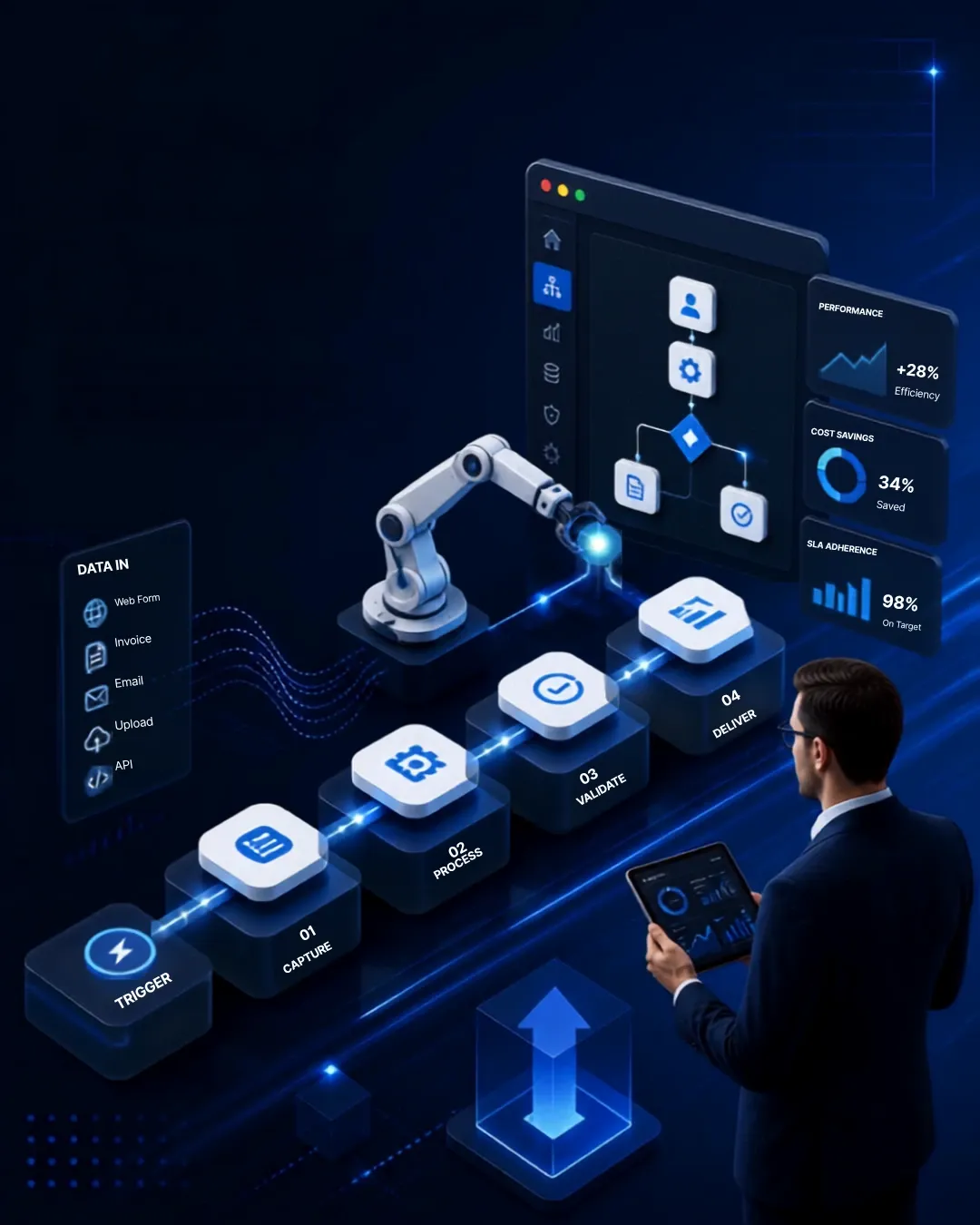
Most conversations about automation still begin with a cost argument. Leaders ask how many hours a new tool will save, how much manual work it will remove, and how quickly it will pay for itself. That framing made sense when automation was rare and expensive. It makes far less sense today, because the tools themselves have become common, affordable, and increasingly powerful. When every competitor has access to the same software, efficiency stops being something that sets an organization apart. The better question for leadership is not what can be automated. It is which processes, once improved, will actually change how the organization competes. Work that touches customer experience, revenue speed, decision quality, and organizational scale deserves far more attention than routine administrative tasks. Competitive advantage Through Process Automation is not really a technology story. It is a story about which parts of the business leaders choose to redesign first.

AI has made it easy for almost anyone to sound like an expert. Articles, whitepapers, LinkedIn posts, executive commentary all of it can be produced faster than ever. But speed isn't the same as substance, and audiences have gotten good at telling the difference. In an industry already full of noise around automation, adoption, and disruption, most leaders aren't looking for more content. They're looking for someone who can actually help them think.
Most conversations about automation still begin with a cost argument. Leaders ask how many hours a new tool will save, how much manual work it will remove, and how quickly it will pay for itself. That framing made sense when automation was rare and expensive. It makes far less sense today, because the tools themselves have become common, affordable, and increasingly powerful. When every competitor has access to the same software, efficiency stops being something that sets an organization apart. The better question for leadership is not what can be automated. It is which processes, once improved, will actually change how the organization competes. Work that touches customer experience, revenue speed, decision quality, and organizational scale deserves far more attention than routine administrative tasks. Competitive advantage Through Process Automation is not really a technology story. It is a story about which parts of the business leaders choose to redesign first.
AI has made it easy for almost anyone to sound like an expert. Articles, whitepapers, LinkedIn posts, executive commentary all of it can be produced faster than ever. But speed isn't the same as substance, and audiences have gotten good at telling the difference. In an industry already full of noise around automation, adoption, and disruption, most leaders aren't looking for more content. They're looking for someone who can actually help them think.
Thought leadership and content marketing get used as if they mean the same thing, but they don't. Both can look like a blog post, a newsletter, or an executive quote in the same feed, so the confusion makes sense. Understanding Thought Leadership vs. Content Marketing really comes down to what sits underneath the format, in what the content is actually trying to do.

For years, brand trust was mostly something a company built on its own terms. Advertising campaigns, celebrity endorsements, and carefully scripted narratives were the tools leaders relied on to shape how the market saw their organizations. That model is no longer sufficient. Digital platforms have shifted the balance of influence toward the customer, and consumers today evaluate brands not through what companies say about themselves, but through the collective evidence created by other consumers. This evidence is what we now call User Generated Content, and it has quietly become one of the most important forces shaping brand credibility in consumer markets.

Most conversations about automation still begin with a cost argument. Leaders ask how many hours a new tool will save, how much manual work it will remove, and how quickly it will pay for itself. That framing made sense when automation was rare and expensive. It makes far less sense today, because the tools themselves have become common, affordable, and increasingly powerful. When every competitor has access to the same software, efficiency stops being something that sets an organization apart. The better question for leadership is not what can be automated. It is which processes, once improved, will actually change how the organization competes. Work that touches customer experience, revenue speed, decision quality, and organizational scale deserves far more attention than routine administrative tasks. Competitive advantage Through Process Automation is not really a technology story. It is a story about which parts of the business leaders choose to redesign first.
AI has made it easy for almost anyone to sound like an expert. Articles, whitepapers, LinkedIn posts, executive commentary all of it can be produced faster than ever. But speed isn't the same as substance, and audiences have gotten good at telling the difference. In an industry already full of noise around automation, adoption, and disruption, most leaders aren't looking for more content. They're looking for someone who can actually help them think.
Thought leadership and content marketing get used as if they mean the same thing, but they don't. Both can look like a blog post, a newsletter, or an executive quote in the same feed, so the confusion makes sense. Understanding Thought Leadership vs. Content Marketing really comes down to what sits underneath the format, in what the content is actually trying to do.
For years, brand trust was mostly something a company built on its own terms. Advertising campaigns, celebrity endorsements, and carefully scripted narratives were the tools leaders relied on to shape how the market saw their organizations. That model is no longer sufficient. Digital platforms have shifted the balance of influence toward the customer, and consumers today evaluate brands not through what companies say about themselves, but through the collective evidence created by other consumers. This evidence is what we now call User Generated Content, and it has quietly become one of the most important forces shaping brand credibility in consumer markets.
Every major infrastructure buildout in history has faced resistance. Railroads, power grids, nuclear plants- each one tested how much friction a nation could absorb before ambition outpaced public patience. What is different about the AI infrastructure race is that the resistance itself has become a target. Foreign adversaries have learned that they do not need to slow down a single data center directly. They only need to slow down the public's willingness to accept one. That is a shift every business leader building on AI infrastructure needs to understand, because the next constraint on growth may not be capital or capability. It may be trust.

Meta is reportedly preparing to begin production of its homegrown AI chip Iris in September, and the news deserves more attention from business leaders than a typical hardware update usually gets. According to an internal memo reviewed by Reuters, the chip, code-named Iris, is part of a four-generation project for Meta Training and Inference Accelerators that the company is designing in-house. This is not Meta's first attempt at custom silicon. The in-house effort has struggled since it launched more than half a decade ago, so the fact that testing took only six weeks and turned up no major issues is being read internally and externally as a genuine turning point.

Ask any hospital administrator what keeps them up at night, and the answer is rarely bed count. It is not knowing. Traditional capacity planning has always leaned on historical averages, on patterns from last year applied to this year. That method worked reasonably well when patient flow was predictable. It does not work anymore. Flu seasons hit harder in some years than others. Staff calls in sick in clusters. Emergencies do not wait for a convenient time. Predictive analytics gives hospitals a way to see these shifts coming instead of reacting after the fact. By feeding historical and live data into statistical models, hospitals can now forecast demand before it actually shows up at the door. The industry is taking this seriously too. McKinsey estimates the global healthcare analytics market will hit 84.2 billion dollars by 2027. For hospital leadership, this is not a minor upgrade to existing software. It changes how the entire organization plans.

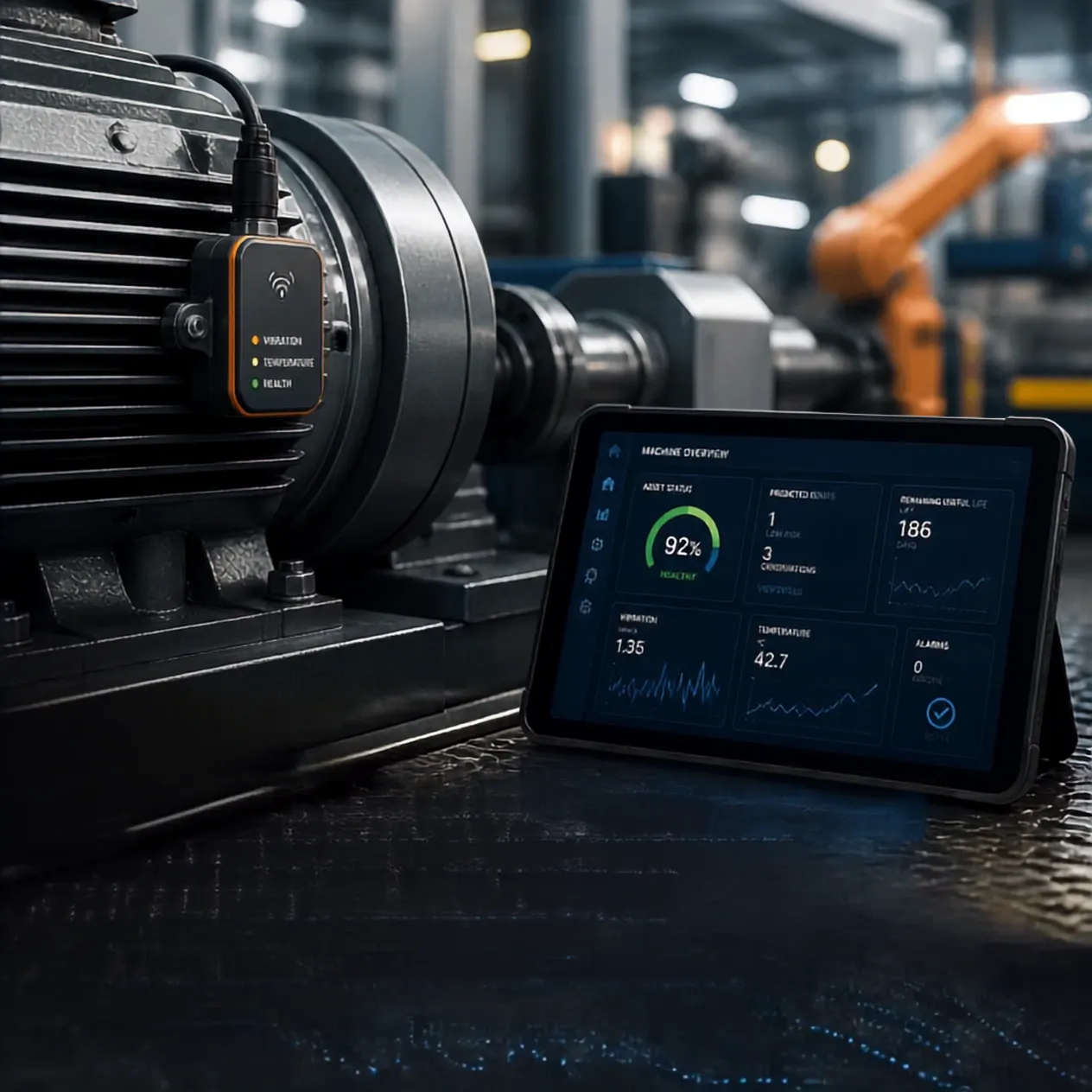
Most manufacturing leaders still treat predictive maintenance as a maintenance decision. They compare the cost of sensors and software against a smaller repair bill and leave it at that. This comparison misses the bigger picture.
Product companies used to compete on the product alone. Better engineering, a sharper feature set, and a strong distribution network were enough to win the sale. That is no longer where the real advantage sits. The companies pulling ahead now are the ones that have learned to earn a customer's trust again and again, month after month, rather than winning them once and moving on. This is the essence of a sound Subscription Economy Strategy, and it is quietly rewriting how leadership teams think about growth.

Every retail organisation now talks about personalisation, but far fewer talk about the infrastructure that actually makes it possible. Strategy documents describe the customer experience leadership wants to deliver. What they rarely describe is the plumbing required to deliver it in real time, at scale, and without breaking under the weight of its own ambition. For senior leaders, this is the gap that decides whether AI investment turns into a genuine advantage or another underused platform.

Enterprise treasury has moved well beyond cash, bonds, and foreign exchange. A recent survey of North American finance chiefs found that nearly a quarter expect their treasury teams to work with Cryptocurrency for payments or investment within the next two years, and at the largest companies that number climbs closer to forty percent. Stablecoins are being used for faster settlement, custody has matured, and boards now expect real governance around digital asset exposure. The conversation has shifted. The question is no longer whether Cryptocurrency belongs in a treasury but how to manage it responsibly in volatile markets.

Payment used to sit off to the side, something you dealt with only after everything else was already decided. Customers would finish choosing a product or service, then move to a different system entirely just to pay for it. That separation used to feel normal. It does not anymore. Across healthcare, logistics, travel, and enterprise software, financial activity is now built directly into the platforms people already use. Customers often complete a payment without realizing it happened at all. This is not a minor design change. It reflects a deeper shift in who owns the customer relationship going forward. Embedded Finance is driving that shift, and leaders who understand it early will be better positioned than those who wait for a competitor to move first.

As ESG regulations get tougher and stakeholders push for more transparency, organizations are realizing something important. The hard part was never writing another report. The hard part is building the ability to collect, validate, and actually use sustainability data all year round, across the whole business.

B2B buyers are not suddenly drawn to prettier graphics. They are dealing with more complex purchases, shorter attention spans, and a flood of content that all starts to sound the same, especially now that AI can churn out another generic article in seconds. Visual communication cuts through that noise. It simplifies what is complicated, sticks in memory longer, and helps a busy buyer understand something faster than a page of text ever could. That is why it has quietly moved from a nice-to-have into something companies cannot afford to skip.

Every enterprise today sits on more data than it knows what to do with, and yet most of that data is still being used to answer a fairly modest question. What happened last quarter? For years, that was the job analytics was hired to do. It explained results after the fact and left leaders to draw their own conclusions about what came next. That arrangement is no longer good enough. Markets move faster than reporting cycles, and the organizations pulling ahead are the ones that have learned to treat data as a forward-looking instrument rather than a historical record. This is the story of how that change happened, and what it actually demands of enterprise leadership.

The idea behind Zero Trust comes down to four words: never trust, always verify. Every user, device, and application has to prove it belongs, every time, no matter where it's connecting from.

The problem is not the data. The problem is what happens, or more accurately, what does not happen, after it is collected. That is where Customer Data Activation enters the conversation, and why it has moved from a technical concept to a boardroom-level priority.

There was a time when offering a financial product meant years of groundwork before a single customer could be served. Licensing, compliance teams, core banking infrastructure, all of it had to be in place before anything customer-facing could even be considered. Most organizations looked at that barrier and walked away. That barrier has moved. A retailer today can offer point-of-sale credit. A logistics platform can embed working capital loans. A SaaS company can launch business banking as a native feature. None of these are banks. All of them are doing what banks do. Banking-as-a-Service is what made that possible, and for senior leaders thinking seriously about financial services strategy, understanding it is no longer optional.

Most leadership teams have moved past the "should we use AI" debate. That decision is made. The question nobody is spending enough time on is what comes next: are you investing in the right kind of AI, or just the most accessible one?

There is a conversation happening in boardrooms right now that did not exist three years ago. It is not about whether AI works. It is not about whether the technology is mature enough. The question leaders are sitting with today is quieter and more uncomfortable than either of those: how much have we already lost by waiting?

Supply chains are not failing because organizations lack information. They are failing because the systems built to interpret that information were designed for a more predictable world. Volatility is no longer a disruption to manage around. It has become the operating condition itself. Demand shifts faster than quarterly planning cycles can accommodate. Geopolitical pressures move through global networks before procurement teams can even respond. And the buffer that once existed inside long lead times and generous inventory reserves has quietly disappeared. AI is changing the equation. But not in the way most technology conversations suggest.

AI and machine learning in diagnostics are now at exactly that crossroads. The benchmarks are strong. The clinical use cases are legitimate. And the pressure on senior leaders to move quickly is coming from every direction. But in healthcare, moving fast without moving carefully is not an ambition. It is a risk. And the cost of getting this wrong is not just financial.

It is rarely the technology that fails. More often, it is the organization around it. That gap has a name. It is called digital maturity, and it is the single most underestimated factor in why transformation efforts produce activity but not progress. Digital Maturity Models exist precisely to help leaders find and close that gap before it becomes expensive.

Generative AI in healthcare spent its first few years solving a problem leaders could measure immediately: time. Clinical documentation consumed hours that clinicians could not spare. Administrative workflows were inefficient by design. Patient communication was fragmented and slow. Generative AI stepped in as a capable assistant, and the early returns were tangible enough to justify wider investment.

Trust in financial advisory is now being formed before the first conversation ever happens. Clients are watching how firms communicate, what positions they take on uncertainty, and whether their perspectives hold up under scrutiny. By the time a prospective client picks up the phone, their opinion of a firm is often already half-formed. The question for leadership teams is whether that opinion was shaped by intentional Thought Leadership content or by nothing at all.

Business investment strategies in 2026 are no longer being shaped by growth expectations alone. They are being shaped by economic fragmentation, tighter capital discipline, geopolitical uncertainty, and structural shifts that do not always show up cleanly in quarterly reports. Understanding which Macro-Economic Trends demand a strategic response and which are just noise is now one of the harder jobs in the C-suite.

For most of modern marketing, content solved a distribution problem. Brands struggled to reach people, and staying visible required meaningful investment. Access to audiences depended on expensive media, limited publishing channels, and systems that organizations did not fully control. Content existed because brands needed a way to remain present inside a communication environment where visibility was difficult to earn, and consistency often became a competitive advantage.

There is a word that quietly undermines progress inside organizations, healthcare systems, and boardrooms alike. That word is "fine." It signals the end of a conversation before the real work has begun. It normalizes a gap between what is possible and what people have learned to accept.

Millions of people globally are living with diagnosable mental health conditions and receiving no treatment for them. Geography plays a significant role. Someone in a rural area does not just face a longer commute to a psychiatrist. They may face no realistic option at all. Urban centers are not immune either; provider shortages mean long waiting periods even where facilities exist. Add the financial burden of ongoing therapy for those without comprehensive coverage, and the barriers compound quickly.

Most organizations are asking the wrong question about thought leadership. They measure clicks, downloads, and impression counts. They treat it like a content marketing campaign with a defined beginning, a middle, and a trackable end. But thought leadership does not work that way, and leaders who expect it to will consistently undervalue one of the most powerful strategic assets available to them.

Healthcare has long been defined by proximity. If you lived close enough to a hospital or a specialist, you received care. If you did not, you waited, delayed, or went without. For generations, this was accepted as an unavoidable reality. Today, that assumption is being challenged in ways that matter far beyond the technology itself.

For years, thought leadership was built on the authority of perspective. A senior executive with decades of experience, a well-placed opinion piece, a keynote point of view. That currency still has value. But it is no longer enough on its own. The boardroom has changed. The decision-maker sitting across the table today is not looking for inspiration alone. They are looking for confidence. And confidence now comes from evidence.

Most leadership conversations about marketing strategy eventually circle back to the same three questions. Are we reaching enough people? Are we keeping them? And do they actually trust us? These are three very different problems, and the uncomfortable truth is that most brands are trying to solve all three with only one strategy.

Senior leaders today are not short on information. They are short on time to process it. A CEO reviewing content between back-to-back meetings does not read; they scan. They look for the point, the pattern, and the implication, in that order. If your content does not surface those things within seconds, it does not get consumed at all.

Healthcare has always followed the patient. For decades, that meant building hospitals, expanding clinics, and organizing care around physical proximity. What remote patient monitoring is doing now is something different entirely. It is not extending the hospital's reach. It is relocating care into the patient's daily life, making the home, the workplace, and the morning routine the new center of health management.

There was a time when brands controlled the narrative. They decided what consumers knew, when they knew it, and how they felt about it. That era is over. This shift didn’t happen overnight; it built up over time, not from just one change. It accumulated quietly, through the convergence of digital access, social validation, and a fundamental cultural reorientation toward individual autonomy. The result is a consumer who does not follow brands. They audit them.

Most small and mid-size business leaders have heard the phrase "digital transformation" enough times that it has begun to lose meaning. It gets used to describe switching to cloud accounting software, launching a new website, or rolling out a CRM tool. None of these things is a bad decision, but none of them is a transformation either.

Most healthcare leaders invest heavily in clinical excellence and relatively little in how that excellence is communicated before a patient ever walks through the door. This is not something that works anymore.

There was a time when building a better product was enough to win. Then came the era of smarter pricing, faster distribution, and louder advertising. Each generation of business leaders had a clear lever to pull. But something has changed quietly, and then all at once, and the lever that matters most today is not the one most organizations are designed to pull.

Most organizations measure performance against their own history. Last quarter versus this quarter. This year versus last. It feels productive, but it is a strategically limited habit. The moment you step outside your own numbers, a harder question surfaces: How are we actually doing relative to everyone else competing for the same market? That is what financial benchmarking answers. And for senior leaders, the distinction matters far more than most acknowledge.

Sustainability has earned its place at the leadership table. It shows up in quarterly reports, investor calls, brand manifestos, and consumer research with a consistency that makes it feel settled, like a direction the market has already chosen. But settled is not the same as solved. For most organizations, the distance between sustainability as a stated priority and sustainability as a measurable market behavior remains wider than anyone is comfortable admitting.

Most organizations that invest in thought leadership get the sequence wrong. They start with formatting content calendars, publishing schedules, and platform choices before they have settled on what they actually stand for. The result is a lot of activity with very little influence. Articles get published. Newsletters go out. And the people who matter most scroll past all of it without pausing.

In today’s competitive workforce, talent scarcity, expensive skill gaps and intensified expectations from candidates are forcing organizations to rethink their hiring practices. The traditional recruiting process included manual resume screening, subjective interviews, and delayed decision cycles. But technology in recruitment enables us to streamline this process making it faster and more efficient.

Quantum computing is changing the face of computing capabilities, aiming to solve complex problems beyond the possibilities of classical computer systems. The next decade will look forward to foundational assumptions of cyber and financial security, especially quantum computing blockchain security. As traditional cryptographic algorithms utilize the exponential potential of quantum machines, enterprise leaders have to critically assess whether blockchain systems can survive quantum attack vectors.

There's a quiet shift happening in how customers find and choose brands. Most organisations are aware of it. Fewer have truly reckoned with what it means for how they compete.

Every enterprise today produces more data than its leadership can act on. The bottleneck was never analyzed. It was always translating the distance between what data contains and what a decision-maker can absorb fast enough to use.

Content marketing has been made as a long-term growth strategy as core of digital marketing for over a decade now. But as we are evolving with technology, the narrative is changing, making content ROI as not the only marketing metric but a mandate. Digital marketers are giving concrete numbers to the marketers. Modern firms are investing in content marketing such as blogs, videos, thought leadership campaigns, AI-generated content and leveraging various channels. Yet, the content gap remains, as content delivers measurable returns most organizations struggle to maintain the outcomes. According to Ranktracker only 36% of the marketers report they can accurately measure content performance, leaving a huge sum under-utilised.

The consulting industry is diverse and it includes many specializations and niches, but consulting usually covers all aspects of operational activities. In boardrooms across industries, strategy consulting and management consulting are often used interchangeably. As organizations face pressure with scaling AI adoption, optimize operations and unlock new markets for choosing the right consulting approach.

China is trying to build something that no one ever dreamed of building. The Great Firewall is a government managed model shaped to control content and increase surveillance. The future of AI in China is not just geopolitical but critical for global leaders who are making investments, partnerships and risk strategies in technology.

Organizations today are investing in attracting talent and rationing top talent. Yet, despite these efforts, cause a gap that persists with exceptional individual performance does not automatically mean organizational excellence. For business leaders, this gap could mean a strategic challenge. High performing individuals can drive success but without the right approach, alignment and leadership frameworks. This results in organizational talent but limited due to collective impact.

Leadership is often analysed in the moments of stability, but it is truly defined in crisis. When uncertainty increases, stakes high, and time is crucial, the gap between performance and authentic leadership becomes visible. For CXOs and business leaders, understanding authentic leadership under pressure is critical when navigating volatile markets, digital disruption, and geopolitical shifts.

Infosys is a global leader in the next generation digital services and consulting announced its collaboration with Anthropic, an AI safety and research company. This collaboration aims to deliver advanced AI solutions for sectors such as manufacturing, telecommunications, and financial services. The Infosys AI partnership reflects industry trends where enterprises are moving beyond standalone AI tools and more towards integrated AI platforms.

Anti-Money Laundering (AML) compliance has become a crucial component of the global financial systems. Banks and financial institutions are required to identify suspicious activity, transactions, reporting potential crimes, and prevent any illicit activities from coming into the legitimate financial systems. However, as payment systems are growing, traditional AML monitoring frameworks are struggling to keep up with the evolving pace.

Artificial intelligence is becoming core capabilities in the enterprise workflows including decision-making, customer engagement, and operational efficiency. From predictive analytics to generative AI programs, organizations are embedding AI across various critical missions.

Digital platforms, robo-advisors, and AI portfolio tools have changed how investors interact with financial services. Also, investors today are expecting personalized insights, real-time recommendations and efficient digital experiences. However, delivering these structures requires high-quality, well governed and structured data. But, many wealth management companies still work with fragmented data spread across legacy systems, CRM platforms, market feeds and compliance tools.

Digital banking, real-time payments and decentralized financial systems have increased the scale of financial frauds. Financial crime is one of the most challenging problems engulfing the global financial systems. With fraud, money laundering, identity theft, and cyber scams have made financial services digitally challenging. Individuals are leveraging advanced technologies such as AI to target attacks and frauds across multiple platforms simultaneously.

Embedded finance has moved from industry buzzword to foundational fintech strategy. Businesses across sectors from marketplaces to SaaS platforms are embedding financial services directly into their products to create seamless customer experiences. Payments, accounts, cards, lending, and FX capabilities are increasingly being delivered through embedded finance solutions, allowing companies to offer banking-like services without becoming banks themselves.

While many enterprises are understanding the adoption of artificial intelligence into operational workflow. The major critical corporate role that arises is compliance governance. Organizations today are navigating deployment of AI across operations, customer interactions, and decision-making systems. Compliance is not just limited to monitoring policies and audits, but it requires analysis of complex algorithms and data flows to navigate automated decisions.

In today’s business world, global data doubles every two years. That means businesses are drowning in data, but starving for insight. Yet, despite the exponential growth in data, executives often lack timely insights to guide strategic decisions. The challenge is not data scarcity, but its inefficiencies of traditional reporting. Research shows that employees spend 30% of their workweek searching for and compiling data rather than actually analyzing it. This generates a need to innovate secondary report development. Once a manual, resource heavy task is not being transformed with artificial intelligence.

In today’s hypercompetitive world, trust and credibility in business are the true levers of growth. 65% of decision makers mentioned that thought leadership influences a company’s perception. And it directly impacts their willingness to buy. Customers, investors and employees no longer rely on marketing heads but seek authentic voices that demonstrate expertise, vision and reliability.

Artificial intelligence has moved beyond its role of a support system and integrating itself as core of how businesses understand markets, customers and their competitors. Companies that have integrated AI in their market research automation and AI insights 2026 are having a competitive advantage. AI in market research is shaping how businesses are making strategic decisions. Earlier what used to take weeks of manual work is now automated with precise and faster analysis. They are able to spot errors early, predicting demands efficiently and aligning strategies with real-time data.

By 2026, 78% of BFSI leaders say compliance is their No.1 growth risk, are you ready?. In 2026, this has become more truthful specially in the BFSI (Banking, Financial services, and Insurance) sector. Data compliance has become an inseparable part of business growth. For CTOs, CXOs, the question isn’t if compliance matters or not, it is whether your institution is prepared for the next wave of AI driven regulations and technology boost which comes with threats.

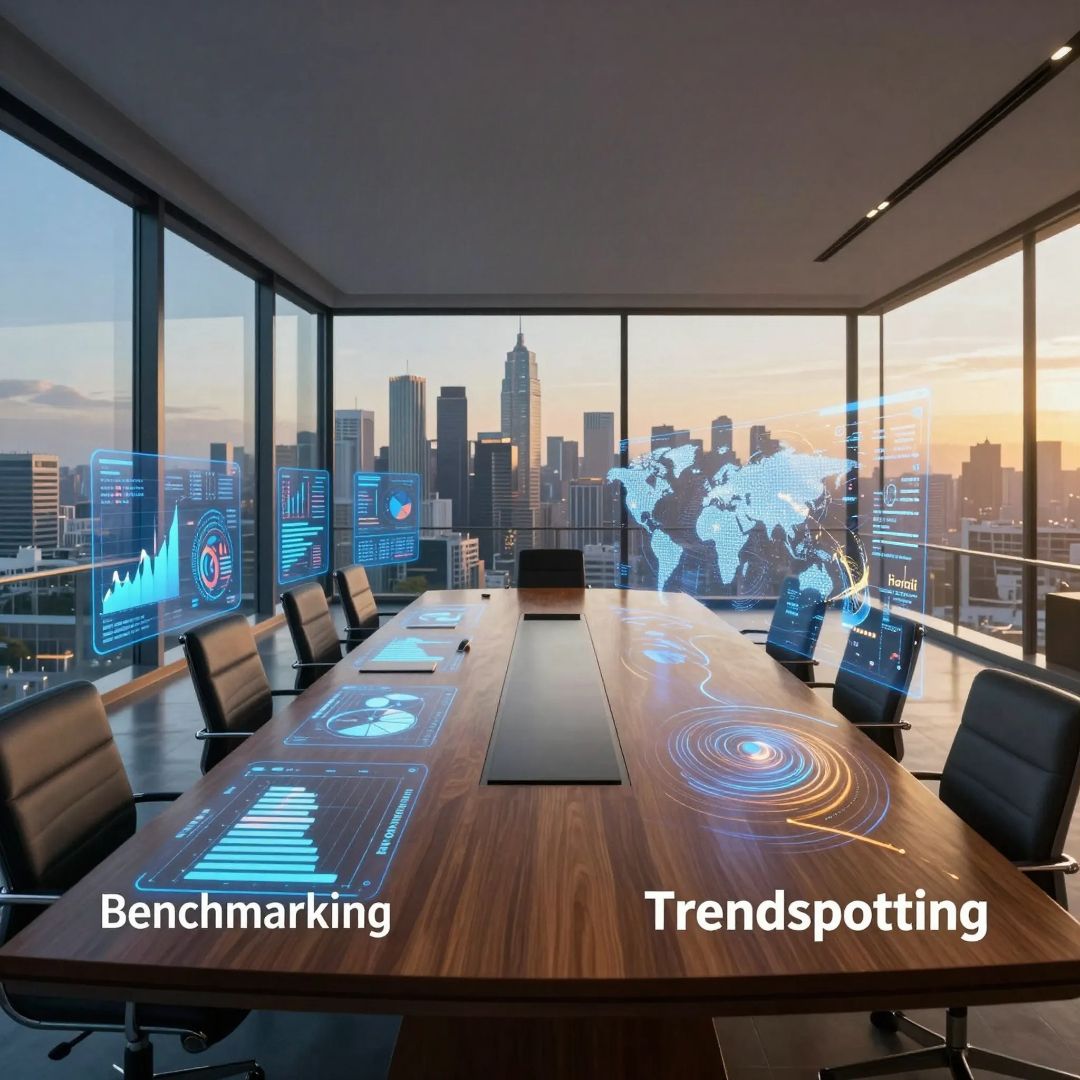
In today's fast-changing business world, leaders are weighing two powerful approaches of benchmarking and trendspotting to understand which one offers the best growth. Both strategies offer great insights, with each different purpose that it serves. This article dives into both strategies, explains their roles, and helps CXOs decide which to rely on in 2026.
Artificial Intelligence has changed the way businesses operate today and not just in operations but AI has integrated itself in strategic decisions to workflows. However, AI has transformed the process of business work but AI has transformed AI. Agentic AI and Generative AI, both have distinct functions but share the same goal- driving business efficiency and competitive growth. A The Editorial Institute, we believe in understanding how these technologies work and complement business, crucial for building a future ready AI-ecosystem.

In 2026, Customer Loyalty has become a marketing tactic major contributor in enterprise relationship management. As the market is growing and consumer expectations are increasing, organizations are shifting from transactional to relationship centric models. For CXOs and business leaders, loyalty is not just about discounts and offers but strategic decisions that influence growth and brand differentiation.

As we begin with 2026, the healthcare industry is beginning to evolve at a much rapid rate in this fast evolving economy. With growth in technology, shifting patient expectations, and increased cost pressures are redefining care delivery. The healthcare leaders must anticipate their strategic position and their organizations capabilities to harness emerging trends.

The expansion of digital infrastructure has placed the United States at the center of the global economy. As artificial intelligence, cloud computing and high-performance computing reshape how enterprises operate, the U.S. growth story has emerged as a defining trend. Data centers are a major part of the digital economy, supporting AI applications, cloud platforms, Internet of Things (IoT), and edge computing. The global demand has led to a tremendous growth in the AI training and workload distribution.

In the field of marketing, AI has moved beyond experimental labs and into core daily operations. Marketing agencies today are embedding AI in workflows and are just improving productivity. And unlocking scalable growth and serving more clients with the same or smaller teams. In 2025, research shows that only 6% of markets use AI in automation tools, leaving a huge percentage of 94% still on the sidelines. Not only this but those who adopt save an average of 18.7 hours per week and up to $47,000 annually in operational costs.

In an era where data drives every business decision, executives face a challenge of transforming complex information into actionable insights. As enterprises have increased AI adoption there is a high volume of unstructured data forcing leaders to rethink communication. Research indicates that the global data visualization market is growing steadily, projected to reach $8.39 billion by 2035 due to data adoption and AI-enabled dashboards.

The global narrative around artificial intelligence has changed in recent years from positive to something far more risky. An AI boom sweeping capital markets, corporate strategies and business forecasts. While this boom has changed market valuations and tech budgets to unpredictable levels, it has also raised critical questions if this growth is sustainable or are we surrounded by an economic bubble? This could change markets and unbalance corporate balance sheets.

As we step into 2026, artificial intelligence and data analytics have surrounded us in every aspect of business operations. They are strategic imperatives reshaping competitive advantage across industries. The integration of AI with data analytics is accelerating decision-making, transforming business models and redefining enterprise performance.

Today financial stress is increasingly widespread and digital natives are more assertive than ever. As traditional banking is becoming tiresome and today’s younger customers including late millennials and Gen Z are moving beyond traditional efficiency. They demand proactive and contextually relevant support from their primary financial institutions. Banking leaders are transforming operations and improving customer engagement by leveraging digital technologies.

In 2026, organizations that fail to operationalize advanced analytics will lose up to 30% of their competitive advantage. In an environment where demand volatility, supply-chain uncertainty and reduced decision cycles relying on historical reporting is not sufficient. Enterprises now expect anticipated outcomes with the help of predictive analytics.

B2B buying behaviour has gone through a fundamental shift. According to Gartner and Forrester research, CXOs and buying committees now complete more than half of the decision before engaging with sales. As we accelerate towards 2026, the future of B2B marketing is defined not by content, but by intelligent, strategic and distinctive content. This influences executive decision-making, accelerates pipeline velocity, and strengthens brand authority in complex buying cycles.

The workspace in 2026 looks very different from what it was a few years back. The post pandemic era where companies are shifting to hybrid and remote workspaces, coupled with the advancements in the artificial intelligence and automation and digital customization have cumulatively worked towards increase in workspace technology 2025. Offices are no longer static work environments that would be defined by desk spaces and boardroom meetings but have shifted to a more flexible and sustainable ecosystem giving room for creativity and productivity to increase.

Artificial Intelligence is transforming the financial sector at a much greater pace than what we could have anticipated a few years ago. In banking, where precision is the key, implementation of AI can enhance its operations. Trust plays a very important factor and AI is proving to be more than just technology advancement but it is becoming the driving force that is leading the banking sector towards a much greater heights. 52% of banks have integrated AI based customer service and around 44% use chatbots to improve their customer services. AI is reshaping not only how banks operate but how it can anticipate strategies.

With automation and next generation AI models getting advanced day by day are able to manage documents, extract data and use automation to reduce the processing time. However, GenAI is not able to make decisions on its own. This changed with Agentic AI. Agentic AI refers to software programs that are specifically designed with a designated role to act autonomously on its own. It is rapidly changing the workflow from traditional decision making softwares to a more advanced approach towards decision making in the enterprise.

Blockchain is a distributed, immutable ledger that records transactions in sequential blocks and is secured with cryptography in business networks. Unlike other traditional databases, blockchain ensures that if once data is being recorded in the system, it cannot be altered without permission. Any item, tangible or intangible, put in a blockchain network can be traded for anything of value minimizing costs and risk associated with it. This shared network among stakeholders across a supply chain to access, verify and rely on one single source of data.

As every industry is working towards sustainability. From the clothing industry to tech giants are promoting reusability of resources. The conversation around circular IT infrastructure has evolved far beyond a niche sustainability initiative. Today, it represents a shift in how organizations view, manage, and maximize the value of their technology assets.Forward-thinking leaders are no longer treating hardware as a disposable commodity which it was a few years ago. Instead, they are designing systems where assets are maintained, reused, and regenerated to deliver long-term business and environmental returns.
Enterprise AI transformation is starting with incorporating AI into the core of any business. According to PwC and Gartner, AI could contribute $15.7 trillion to the global economy by 2030, and 75% of enterprises are expected to shift to pilot AI projects. This shift is taking AI from being a function within business to becoming the solid foundation for how businesses are run.

As per the latest survey, the global hospitality industry, which includes lodging, travel and tourism, food and beverages, is expected to be worth $5.8 trillion by the end of 2025. Travel and tourism were the worst hit during the pandemic, including the hotel industry, with a record low room occupancy forcing many hotels to shut down. However, the industry has come up with efficient ways to adapt to the new changing world through rapid technological advancements.

Companies are moving towards what is now known as the circular retail economy. This approach leads to designing products that can be reused, repaired, resold or recycled instead of being discarded after one use. This shift enhances brand reputation while contributing to environmental responsibility.

In an era where data is ubiquitous (everywhere and common) but insight is rare, the difference between listening and truly understanding your customers, employees, or partners lies in the power of a well-designed survey. Surveys have long been a staple in the tech industry, used for everything from gauging customer satisfaction to fine tuning product features. Yet, many of us in leadership have been guilty of greenlighting surveys that collect data but fail to lead to meaningful change. The fault rarely lies with respondents. More often than not, it’s rooted in lack of clarity at the survey design stage.

With over 402.74 million terabytes of data created daily, it is evident that it has become a driving force in our day-to-day lives. Everything we consume is increasingly distilled into data points. By 2025, nearly every company will be aggressively accumulating data because that’s where the power of modern marketing lies. According to surveys, almost 58% of workers feel overwhelmed by the amount of data at their disposal. Data visualisation is essential as it turns complicated, dense datasets into understandable, actionable insights. These tools not only empower companies and organisations with more power, but they also make it easier for data analysts to understand and simplify vast amounts of data.

A few years ago, we were still discussing and enhancing PowerPoint decks and spreadsheets in boardrooms, trying to extract meaning from raw data and bullet points. Switch to 2025 and the world is different. Today, things have changed and they’ve changed fast. Business communication is no longer just about what one says, but how they say it. And moreover, how they show it. This opens the ground for our discussion on Visual Storytelling in Business Communication.

A few years ago, we were still discussing and enhancing PowerPoint decks and spreadsheets in boardrooms, trying to extract meaning from raw data and bullet points. Switch to 2025 and the world is different. Today, things have changed and they’ve changed fast. Business communication is no longer just about what one says, but how they say it. And moreover, how they show it. This opens the ground for our discussion on Visual Storytelling in Business Communication.