China, Russia and Others Seek to Inflame Debate Over A.I. Data Centers

TEIJul 17, 2026
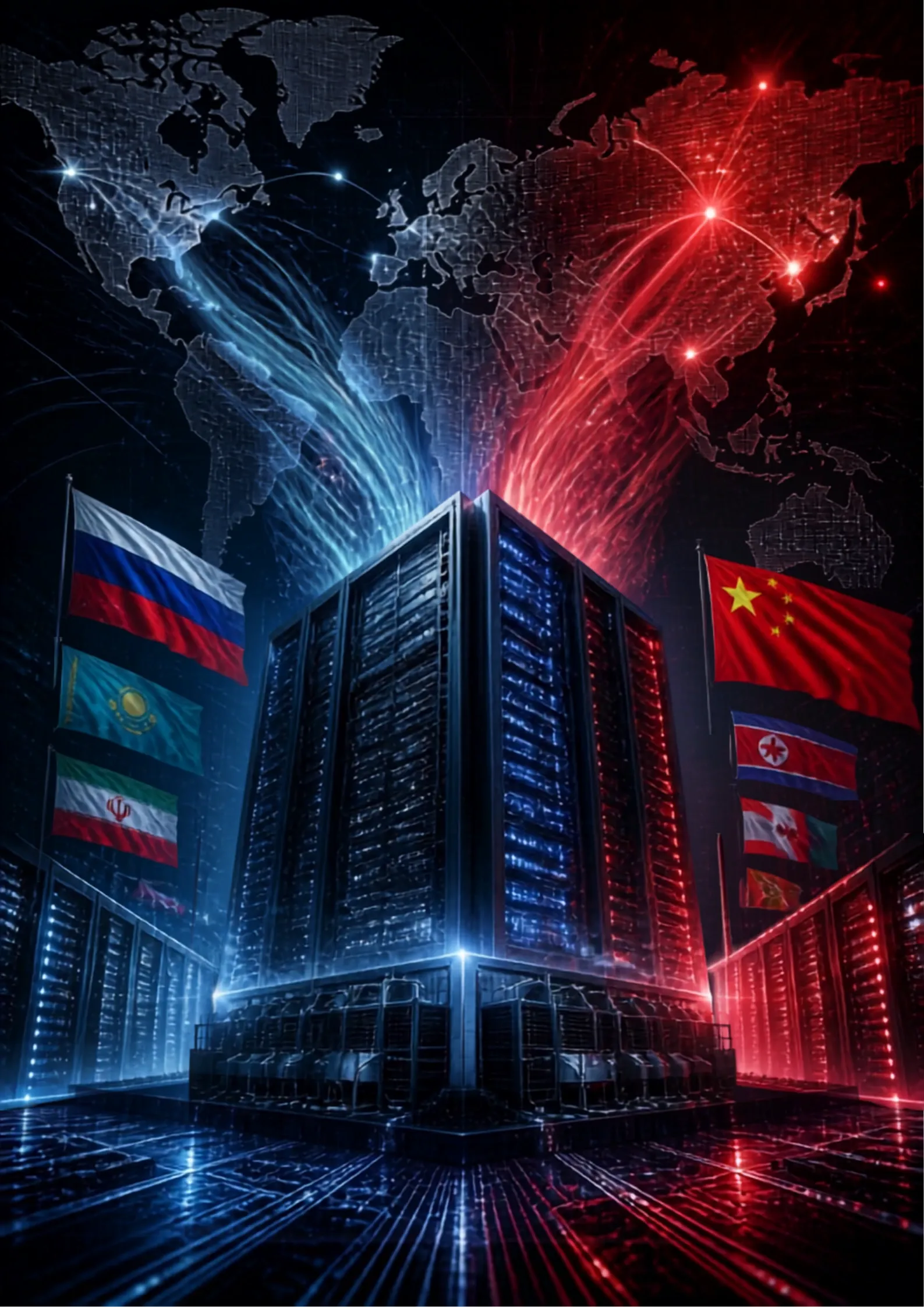
Every major infrastructure buildout in history has faced resistance. Railroads, power grids, nuclear plants- each one tested how much friction a nation could absorb before ambition outpaced public patience. What is different about the AI infrastructure race is that the resistance itself has become a target. Foreign adversaries have learned that they do not need to slow down a single data center directly. They only need to slow down the public's willingness to accept one. That is a shift every business leader building on AI infrastructure needs to understand, because the next constraint on growth may not be capital or capability. It may be trust.
A recent pattern makes this shift visible. A Chinese state newspaper published a satellite photo of a data center in Gainesville, Virginia, framing AI expansion as a direct threat to Americans' physical and financial well-being. Around the same time, a comic strip built using ChatGPT and traced back to individuals operating in China circulated widely on social media, depicting a cigar-chomping tycoon clutching bags of cash as electricity bills climbed. In Armenia, a video tied to a known Russian influence network questioned whether an American-funded data center could survive the country's unstable power grid.
None of these campaigns invented the underlying frustration. That is precisely what makes this worth studying. The anger over data centers is real. Foreign actors are not creating it from nothing. They are amplifying it, at scale, and with intent.
Communities Are Pushing Back
A Gallup poll from earlier this year found that more than 70% of Americans say they would oppose a data center being built near them, a level of resistance nearly 20 points higher than opposition to a nearby nuclear plant. People living close to these facilities cite noise, rising local power costs, and warehouse-sized buildings rising where they expected open land. Analysts tracking this trend found that state-linked media outlets in China, Russia, and Iran referenced data centers roughly 4 times a day on average earlier this year, a small share of their overall AI coverage but a steady one. Researchers at the threat intelligence firm Alethea describe the strategy plainly. Foreign actors are not creating this debate. They are exploiting a fracture that already exists.
That distinction matters more than it might seem. If the discontent were entirely fabricated, it would be easier to counter. Because it is rooted in genuine concerns about electricity prices, water use, noise, and the pace of change, it cannot simply be debunked away. It has to be managed, and that puts companies building this infrastructure in a much harder position.
Narratives Shape Infrastructure
What makes the data center fight unusual is that it does not split neatly along party lines. Senator Bernie Sanders and former Trump adviser Stephen Bannon have both criticized the pace of data center construction, for very different reasons but with similar intensity. Interior Secretary Doug Burgum recently acknowledged on television that some of the foreign propaganda appeared to be landing effectively with the public. Meanwhile, Senator Tom Cotton has pushed federal officials to treat the foreign amplification as a threat in its own right, separate from the legitimate concerns feeding it.
There is also a messier layer underneath all of this. Some advocacy groups have accused environmental organizations of being quietly funded by foreign donors to slow data center growth, claims that at least one named foundation has firmly denied, calling them misleading attempts to pressure the public into accepting new construction. Other researchers have pointed to specific meetings and funding trails as evidence of a longer-running influence effort tied to China, though the individuals named have not responded publicly. And separate from any political motive, researchers have also found large networks of fake local-sounding accounts on Facebook and Instagram, with names resembling regional pride pages, pumping out AI-generated images designed to look like grassroots opposition across all 50 states. One analyst called it rural rage bait, content engineered purely to maximize outrage and engagement rather than to serve any government's agenda.
Resilience Requires Transparency
For executives building or depending on AI infrastructure, the lesson here is not about picking a side in a geopolitical dispute. It is about recognizing that public sentiment has become a genuine variable in how fast, and whether, critical infrastructure gets built. Permitting delays, local moratoriums, and community pushback are no longer just local governance issues. They are shaped in part by a global information environment that specific foreign actors are actively trying to influence.
This means infrastructure risk can no longer sit quietly inside operations or IT. It belongs in the same conversations as supply chain resilience, energy strategy, and regulatory exposure. Leaders need to understand not only where their compute and power are coming from, but how vulnerable the public narrative around that infrastructure is to being amplified, distorted, or weaponized.
The organizations that will navigate this well are not the ones that ignore the noise or dismiss it as fringe activity. They are the ones that take community concerns seriously, communicate transparently about energy and water use, and build infrastructure strategies resilient enough to withstand both legitimate scrutiny and coordinated exploitation of that scrutiny.
The AI Race Is Physical
The fight over data centers is not really a fight about buildings. It is a preview of how contested the ground beneath the AI economy is going to be, and how much that contest will shape who can lead it.
At The Editorial Institute, we help leadership teams separate genuine signal from manufactured noise, and turn that clarity into infrastructure and communication strategies built for long-term resilience.
Trending
View All