The Top 5 Hospitality Industry Technology Trends in 2026

TEIDec 11, 2025
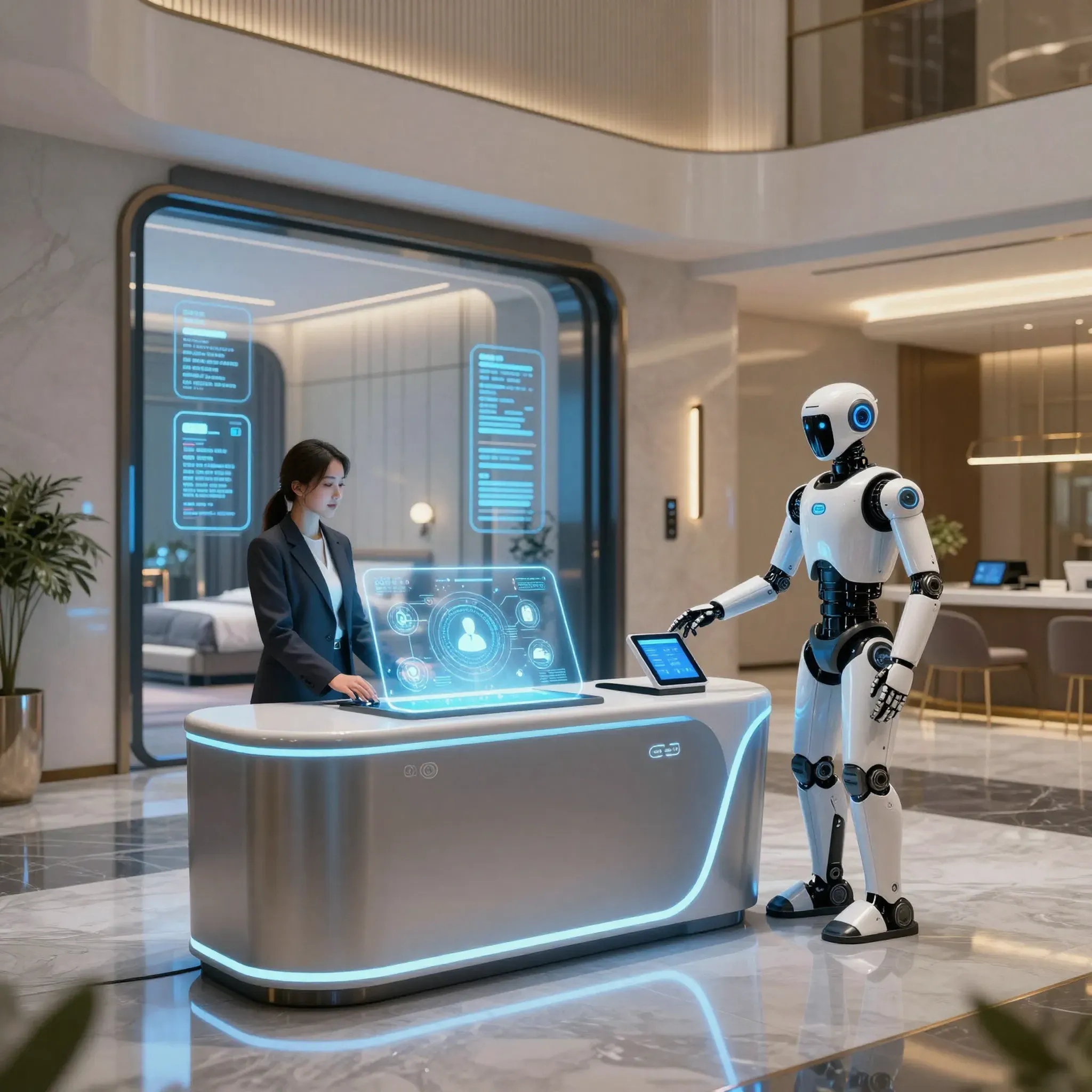
Imagine checking into a hotel with facial recognition to unlock your hotel rooms and your favourite coffee and snacks already waiting in the mini-bar exactly as you selected during pre-booking. This is the reality in 2025. And this is how the hospitality industry is changing much more rapidly and making the experience user-centric.
As per the latest survey, the global hospitality industry, which includes lodging, travel and tourism, food and beverages, is expected to be worth $5.8 trillion by the end of 2025. Travel and tourism were the worst hit during the pandemic, including the hotel industry, with a record low room occupancy forcing many hotels to shut down. However, the industry has come up with efficient ways to adapt to the new changing world through rapid technological advancements.
Numerous tech innovations are reshaping operations and guest experience in the hotel industry. Here are The Top 5 Hospitality Industry Technology Trends in 2026.
1. Contactless check-in to minimize contact
Post pandemic, all the world is deeply aware of the health crisis, and every industry is adapting rapidly to ensure its survival. With technology shaping every industry, the hospitality industry is seeing a massive change in terms of ensuring check-in kiosks with no face-to-face interactions. Guests can complete check-in with a simple tap on their smartphones, using digital keys and scanning the QR code via integrated apps. This evolution is benefiting both the hotelier and the guests for smooth operational services and improved overall guest experience.
According to The Editorial Institute these trends of contactless check-ins are just the beginning of the much larger potential of the hospitality industry. Major travel platforms today like Makemytrip, Trivago, and Yatra allow their customers to complete the whole booking on their mobile apps with contactless payments, further driving tech innovations in the hotel industry.
2. AI chatbots are revolutionizing customer service
Chatbots have been an emerging hospitality technology trend in 2026. Initially developed as a customer support tool, they have evolved to wide array of applications, including multilingual support promoting global tourism. With 24/7 assistance hotels can now operate and respond to queries across various timezones. Marriott International to Hilton, and Oyohotel adopted multilingual chatbots to enhance customer services.
Designed specifically for India's diverse linguistic market, Sarvam Agents provide voice-enabled access to AI support in over 10 Indian languages such as Hindi, Tamil, Telugu, Malayalam, Gujarati, Marathi, Kannada, Bengali, Odia, and more. This ensures a comfortable and personalised experience for domestic travellers. As chatbots are improving customer service, they are redefining how hotels communicate with their guests.
3. Immersive technologies for a wholesome experience
AR/VR technologies in 2026 are enhancing hotel interactions and offering immersive stay experiences. Hotels like Marriott and Radisson now offer a 360-degree VR tour of their suites, allowing guests to explore rooms virtually before booking. Guests can use AR glasses for real-time directions while on-site navigation of the hotel.
AR also enables the guests to opt for live menus that display information about ingredients, nutritional content, and preparation methods, adding transparency and enriching the dining experience. Meanwhile, VR is increasingly being used to hotel train staff, improving customer interactions, housekeeping routines and emergency protocols.
4. Robotics: Redefining Efficiency and Guest Experience
Robots are no longer a future concept, they have become a reality in 2026, improving operational efficiency while adding X-factor to the futuristic guest experience, catering to tech-savvy travellers. Hilton’s famous “Connie” Concierge Robot is handling room service deliveries to housekeeping duties, and even luggage assistance. Robots equipped at reception desks are making the check-in process even more efficient and time-saving with facial recognition and multilingual AI, changing the hospitality industry in a much more dynamic way.
In kitchens, robot chefs are revolutionizing the hotel industry with precision cooking and 24/7 availability, removing the restriction of operating for fixed times. According to The Editorial Institute, robots are the new future in the hospitality industry to look out for in 2026.
5. Sustainable Tech Solutions for Reducing Carbon Footprints
In 2025, hotels are adopting green technology for a sustainable future, like solar water panels, light sensors to switch off light when not in use, greywater recycling systems to reuse water from flushes and showers to water landscapes. The ITC hotels use a 100% renewable energy system in all their hotels.
Smart Hotels are making use of the Internet of Things (IoT) to automate and track sustainability data points like air quality, temperature, humidity, and levels of CO₂. AI-driven waste sorting, composting machines, and food waste trackers are already in use in hotels to cut back on their contributions to landfills.
Using Bluetooth technology, many hotels have replaced traditional plastic key cards with mobile keys.
Unlike plastic key cards, mobile keys are more convenient and eco-friendly, shifting the hotel industry towards environmentally conscious technology. Additionally, the hotel industry now emphasizes e-billing and cashless payment methods, as well as digital menus, to streamline the guest experience and minimize physical contact.
How India is making a wave in smart tech hospitality systems
India’s hospitality industry, projected to be valued at over $80+ billion by 2025, is rapidly embracing technology as a key driver of growth. The implementation of government schemes like Swadesh Darshan 2.0 is catalysing this transformation through innovative tourism development schemes. From AI-powered chatbots that respond in Hindi and other regional languages to mobile check-ins and digital room keys, the guest experience is getting seamless and specialized. The widespread adoption of UPI transactions and transition to digital ID verification led by Aadhaar has further streamlined check-ins and payments across the country. Indian hotel tech startups are also expanding their solutions overseas, making the country a growing innovation hub in the global hospitality landscape.
In 2026, the Hospitality industry is transforming, driven by technology and sustainability. Artificial Intelligence plays a crucial role in analyzing guest experience, enabling hotels to recommend personalized recommendations, dynamic pricing, and upgrades. Chatbots are helping booking, query response, and in-room services in real-time. Hotels are focused on sustainability and undertake solar power, intelligent water systems, and IoT-enabled energy management solutions. House-keeping, room delivery, and concierge services on the road for metro cities are being tested with robotics and automation. AR and VR are adding immersive layers to the hospitality experience with 3D virtual tours to interactive dining experiences. Altogether, advances in technology are redefining the hotel industry by making hotel stays safer, comfortable, personalised, and immersive than before.
Trending
View All