Predictive Maintenance in Manufacturing: The ROI That Justifies the Investment

TEIJul 8, 2026
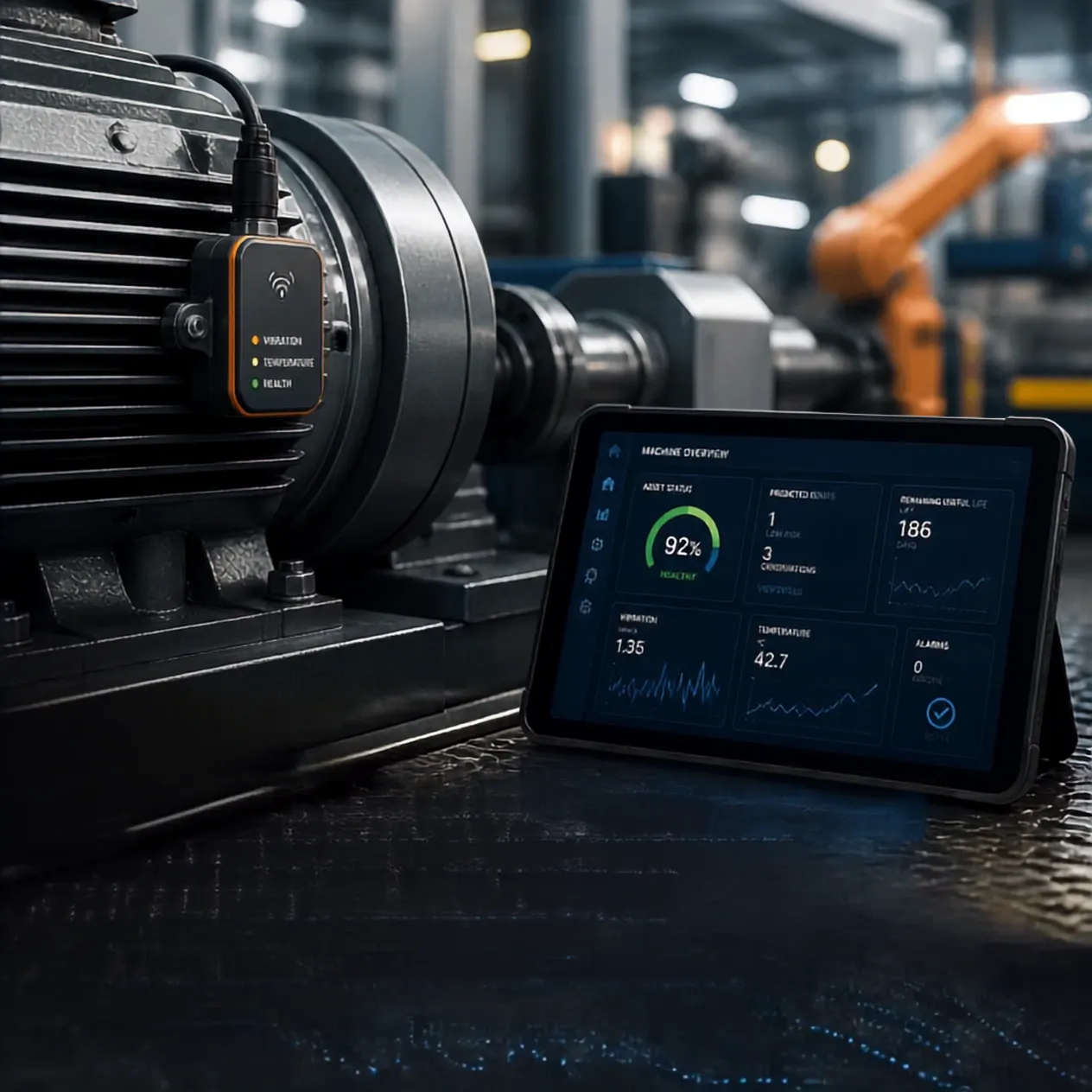
Most manufacturing leaders still treat predictive maintenance as a maintenance decision. They compare the cost of sensors and software against a smaller repair bill and leave it at that. This comparison misses the bigger picture.
The better question is how much revenue, capacity, and customer trust a factory loses every day it runs without predictive insight. Once leadership reframes the conversation this way, predictive maintenance stops looking like an operational upgrade. It starts looking like a capital allocation decision, one that belongs in the boardroom and not only on the plant floor.
The Cost of Downtime
Manufacturing today is far more interconnected than it was even a decade ago. Production lines run on tight scheduling, lean inventory, and predictable throughput. A single equipment failure rarely stays contained to one machine or one shift.
It spreads outward into missed shipments, overtime labor, scrapped output, and strained customer relationships. As factories become more automated, the cost of downtime grows faster than the cost of preventing it. This widening gap is the real case for predictive maintenance, and it is why manufacturers who once saw it as optional now treat it as core strategy.
Where the Return Actually Comes From
Downtime avoidance is usually the largest piece of the return, but it is far from the only one.
1. Downtime avoidance
Even a small cut in downtime hours adds up fast once you multiply it across a full year of production.
2. Labor efficiency
Condition-based servicing cuts out unnecessary routine checks, so technicians spend their time on work that actually matters.
3. Longer asset life
Machines maintained based on real condition age more gracefully, avoiding the wear that comes from either over-servicing or waiting until something breaks.
4. Lower energy use
Equipment running in good health simply uses less power than equipment already struggling under strain.
5. Higher equipment effectiveness
Better uptime means more usable capacity, and you get it without spending on new machines.
6. Lower risk exposure
Fewer catastrophic failures put the business in a stronger position with both insurers and regulators.
Some organizations report total returns above five hundred percent once availability gains and avoided safety incidents are included. The number will differ by industry, but the pattern is consistent enough that leadership should take it seriously rather than treat it as an exception.
Value Beyond the Balance Sheet
The financial savings are easy to justify to a finance team, but the softer benefits matter just as much over time. Early detection of mechanical faults prevents the kind of failure that puts workers at risk, not only equipment. Spare parts planning also becomes more disciplined, moving from guesswork to genuinely demand-driven inventory. And because production schedules become more reliable, customer commitments become something the business can stand behind with confidence.
What Actually Drives the Return
Installing sensors does not create ROI by itself. The real driver is the quality of the data those sensors produce and how well that data gets interpreted. Better sensors and models cost more upfront, but if the data they generate is accurate enough to build reliable predictions, that cost is easily justified by what it prevents.
Five years ago, this meant heavy investment in specialized hardware and expert analysts to interpret the readings. AI has changed that considerably, lowering implementation costs while pushing prediction accuracy higher. Modern platforms now bring together IoT sensors, edge computing, machine learning, and cloud analytics into a single system that does more than report a vibration value. It identifies the specific failure mode and recommends corrective action before an operator would ever notice anything unusual on the floor.
People still matter just as much as technology. Predictive alerts only turn into value when engineers and maintenance teams have the skill to read them and act quickly. Investing in people alongside the platform is not a nice-to-have. It is often the deciding factor in whether the investment pays off at all.
Where Programs Lose Their Return
Most underperforming predictive maintenance programs have little to do with faulty technology. The problems are usually strategic.
Common issues include monitoring every machine equally instead of focusing on the assets that matter most, collecting data without building the analytics to use it, and installing sensors without pairing them with real diagnostic intelligence. Alerts that never get folded into daily maintenance workflows are another frequent gap, as is rolling out a system without training the team to respond to it. Poorly tuned alarms compound the problem, since too many low-value alerts eventually get ignored altogether.
The organizations that avoid these traps tend to follow the same approach. They start with a narrow, high-impact rollout, prove the value on critical equipment, and expand once that value is clear. This sequencing is often what separates programs that deliver real returns from ones that quietly stall.
A Shift in Competitive Advantage
As Industry takes hold across the sector, production capacity alone no longer decides who wins. These days, reliability, data intelligence, and operational efficiency count for just as much as the machines themselves. Predictive maintenance sits at the center of this shift because it lets a factory anticipate failure before it disrupts production, rather than reacting once damage is already done.
Forecasts continue to point toward strong growth in predictive maintenance adoption as industrial AI matures. The manufacturers investing now are not just upgrading equipment. They are building the foundation needed to compete in an increasingly data-driven industry.
What Leadership Should Prioritize
Turning predictive maintenance into real return comes down to a handful of disciplined choices made early. Start with the equipment where downtime hurts the most, rather than spreading the investment thin across everything at once. And before rollout even begins, agree on what success actually looks like, whether that's downtime reduction, equipment effectiveness, or both. Connect the system to ERP, CMMS, and production platforms so insight reaches the whole organization, not just maintenance. And invest in people just as seriously as technology, since capability is what ultimately converts data into results.
Conclusion
The real question facing manufacturing leaders is no longer whether predictive maintenance is worth the investment. It is how much the factory is already losing without it. Predictive maintenance has grown into a business strategy that protects revenue, extends asset life, reduces risk, and strengthens long-term profitability.
At TEI, we help manufacturing leaders look past the technology itself to understand the strategic decisions that create lasting business value.
Trending
View All