The Future of Hospital Capacity Planning: Predictive Analytics in Action

TEIJul 10, 2026
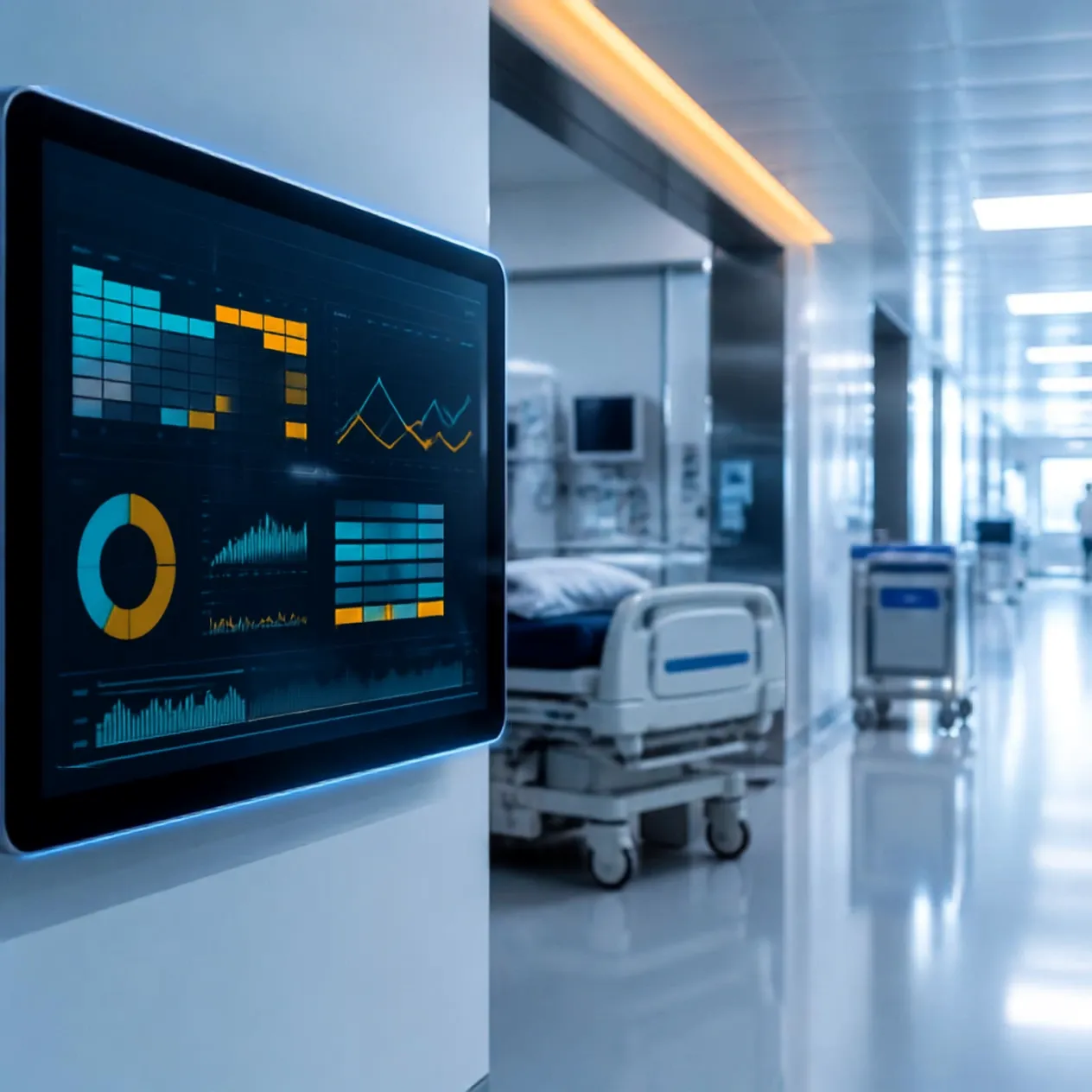
Ask any hospital administrator what keeps them up at night, and the answer is rarely bed count. It is not knowing. Traditional capacity planning has always leaned on historical averages, on patterns from last year applied to this year. That method worked reasonably well when patient flow was predictable. It does not work anymore. Flu seasons hit harder in some years than others. Staff calls in sick in clusters. Emergencies do not wait for a convenient time. Predictive analytics gives hospitals a way to see these shifts coming instead of reacting after the fact. By feeding historical and live data into statistical models, hospitals can now forecast demand before it actually shows up at the door. The industry is taking this seriously too. McKinsey estimates the global healthcare analytics market will hit 84.2 billion dollars by 2027. For hospital leadership, this is not a minor upgrade to existing software. It changes how the entire organization plans.
Prediction Improves Every Patient Journey
Good forecasting changes what patients actually experience. If a hospital can predict how many people will show up in the emergency department on a given evening, it can schedule staff before the rush, not during it. The same logic applies to admissions and discharges. When those numbers are forecasted using electronic health records and transfer data, beds turn over faster, and patients spend less time parked in a hallway waiting for a room. Predictive models also help identify patients who are more likely to deteriorate or return for readmission, often by looking at prior conditions and past healthcare use. That early flag gives care teams a chance to step in before things get worse, not after. None of this shows up as one dramatic improvement. It shows up as shorter waits, fewer bottlenecks, and care that feels less rushed.
Build Predictive Planning Foundations
Data and Model Foundation
None of this works without solid data. Hospitals need to pull from electronic health records, hospital management systems, admission and discharge logs, bed occupancy numbers, and staffing schedules. More hospitals are now adding wearables and connected devices into the mix, capturing vitals in real time. Before any of it is useful, it has to be cleaned up and standardized. Once that groundwork is done, predictive models come into play, usually a combination of supervised methods like decision trees and logistic regression, along with unsupervised approaches like k-means clustering. Together, these models drive the three things that actually matter for capacity: demand forecasting, patient flow prediction, and length of stay estimates.
Technology Integration
A forecast sitting in one department does nobody any good. The insight has to travel. That means cloud systems that can handle large volumes of real-time data, dashboards that different teams can actually see, and alerts that fire automatically when something like a bed shortage is coming. Departments need to be connected, not siloed. A prediction that never leaves the IT team is just a number on a screen.
Operational Readiness
This is the part hospitals tend to underestimate. Technology alone does not fix capacity problems. Clinical staff, operations, and IT need to work together, and the models need regular checking against what actually happens on the floor. Staff also need training, because a tool nobody trusts does not get used. Add proper data governance around privacy and quality, and you have the human side of the equation covered. Skip this layer, and even the best algorithm will underdeliver.
Better Planning Delivers Better Care
The benefits show up almost everywhere you look. Beds get managed better. OR schedules run tighter. Staffing stops being a guessing game every morning. Patients feel it too. Problems get caught earlier, treatment fits them more closely, and fewer people end up staying in the hospital longer than they need to. On the money side, leaning into prevention instead of scrambling during emergencies means fewer wasted procedures and fewer readmission penalties, so resources actually go further. For leadership, it really comes down to one thing. Decisions stop running on gut feeling and start running on real numbers, and that matters most when demand spikes out of nowhere.
Adoption Demands More Than AI
None of this comes easy. Patient data privacy is not something hospitals can afford to get wrong. Patient data privacy is a big deal, and rightly so. Hospitals cannot afford to get this wrong. They have to stay compliant with regulations like HIPAA, and that means keeping encryption solid and making sure only the right people can get to sensitive records in the first place. Models trained on incomplete or biased historical data can end up treating certain patient groups unfairly, which is why transparency in how these models work matters so much. And this is not a project with a finish line. Hospitals that treat it as a one-time rollout instead of an ongoing process usually see the benefits fade within a year or two.
Healthcare Is Becoming Predictive
The direction healthcare is heading in is clear. Deep learning is already reading medical scans with a level of precision that rivals experienced radiologists. AI is quietly automating tasks that used to eat up staff time, like flagging anomalies in patient records. Remote monitoring and telemedicine are stretching this forecasting ability outside hospital walls entirely, catching warning signs from a patient's home before they ever need an ambulance. None of this happens in isolation either. It takes data scientists, clinicians, and policymakers working together to move fast without cutting corners.
Conclusion
Hospital capacity planning is shifting away from static schedules and toward something far more responsive. Predictive analytics lets hospitals see demand coming, personalize care, and use resources without as much guesswork. As pressure on healthcare systems keeps growing, the hospitals that start building this capability now are the ones that will be ready when it matters most.
Is your hospital prepared to predict demand before it becomes a challenge?
Trending
View All