The Future of Remote Patient Monitoring: Opportunities and Challenges

TEIApr 25, 2026
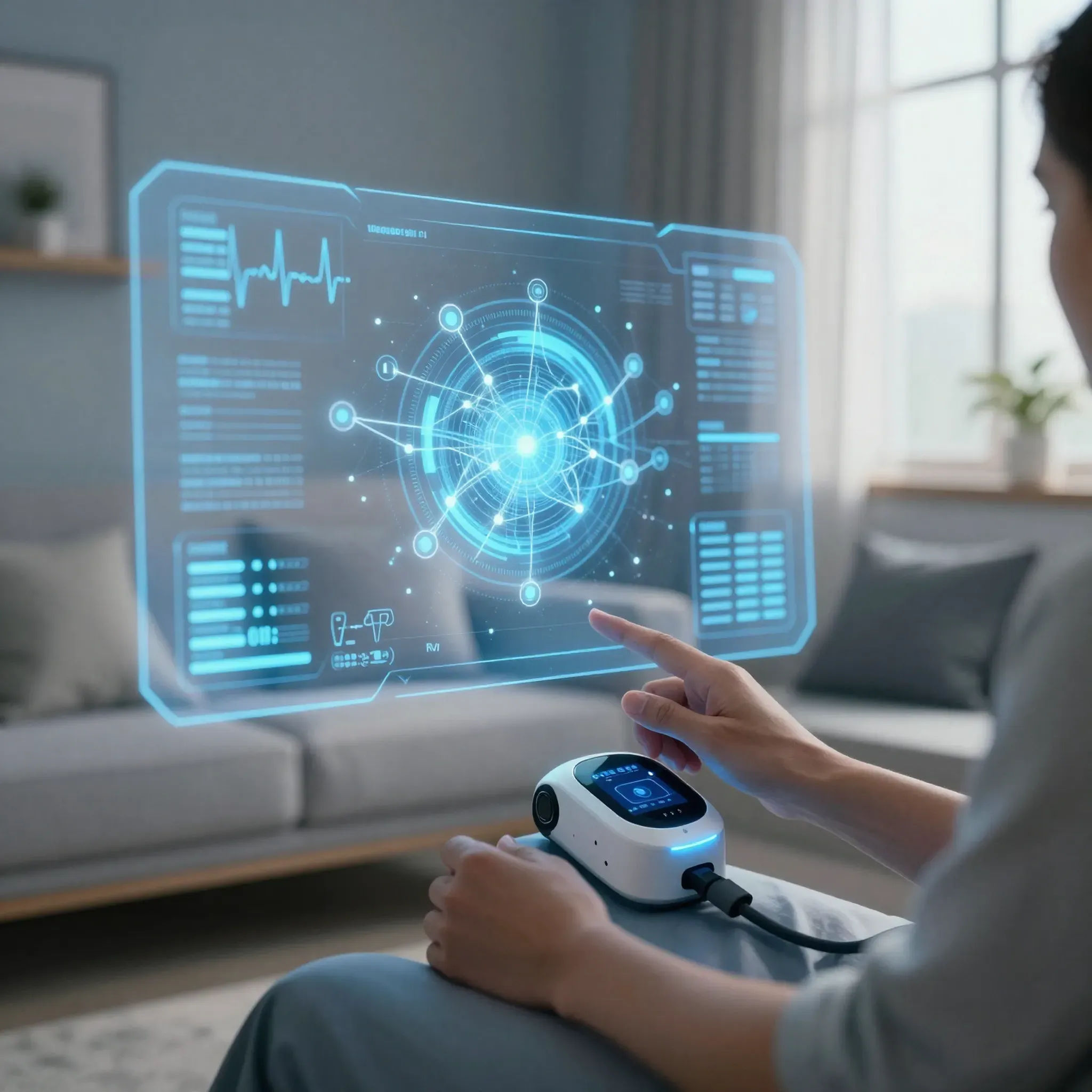
Healthcare has always followed the patient. For decades, that meant building hospitals, expanding clinics, and organizing care around physical proximity. What remote patient monitoring is doing now is something different entirely. It is not extending the hospital's reach. It is relocating care into the patient's daily life, making the home, the workplace, and the morning routine the new center of health management.
This is not a technology story. It is a structural one. It is about how healthcare systems fundamentally rethink where value is created and where risk needs to be managed.
From Episodes to Ecosystems
Traditional care models are episodic by design. A patient deteriorates, seeks attention, receives treatment, and is discharged. The system resets and waits. Remote patient monitoring breaks that cycle by creating continuous, data-driven visibility into a patient's condition between those clinical touchpoints, in the hours and days where most health decisions actually happen.
A patient with diabetes should not have to wait for a quarterly check-up to know whether their treatment is working. Remote patient monitoring makes it possible for clinicians to track blood pressure, glucose levels, and heart rate in real time, from wherever the patient actually lives their life. For people managing chronic conditions like hypertension, heart disease, or asthma, that kind of continuous visibility is not a convenience. It is the difference between catching a problem early and responding to a crisis.
The strategic implication is straightforward. Proactive intervention is structurally less expensive and more effective than reactive treatment. Organizations that understand this are not just deploying devices. They are redesigning how clinical attention is allocated and how risk is distributed across an entire patient population.
Complexity Scales Faster
The market interest in remote patient monitoring is growing quickly. Payers are beginning to align reimbursement structures around it. Health systems are running pilots to reduce readmission rates and improve chronic disease outcomes. The data make a compelling case on paper.
But scaling from pilot to program is where most organizations quietly stall. The opportunity is substantial precisely because the complexity underneath it is real.
Remote patient monitoring brings together wearable devices, software platforms, mobile applications, and electronic health records, and every one of those systems needs to talk to the others. The problem is that most of these tools come from different vendors, are built on different architectures, and are not always designed to work together. When a monitoring device cannot transmit data in a format that a clinician's system can actually read, the clinical value disappears completely, regardless of how sophisticated the device is.
Execution Defines Outcomes
Three areas consistently determine whether remote patient monitoring programs succeed or slowly plateau.
The first is clinical workflow integration. Bringing RPM into an existing healthcare environment is not simply a matter of handing out equipment and hoping teams figure it out. It changes the way doctors and nurses structure their day, adding new dashboards, alert thresholds, and data streams to workflows that are already stretched. Without proper training and deliberate redesign, RPM starts to feel like one more thing to manage rather than a tool that actually helps, and staff adoption suffers regardless of how capable the technology is.
The second is data quality versus data volume. The promise of continuous monitoring is better insight. The risk is the exact opposite. Organizations that generate high-frequency patient data without clear protocols for acting on it do not improve care. They overwhelm the clinical teams they were trying to support, creating alert fatigue and decision paralysis among the very professionals the system was meant to help.
The third is equity and access, and this one does not get enough attention. The communities that stand to benefit most from remote patient monitoring are often the ones least equipped to use it. In rural areas, reliable broadband is not a given. In lower-income households, a smartphone or a stable Wi-Fi connection cannot be assumed. When the infrastructure is not there, the monitoring breaks down, and the gaps that follow are not just technical inconveniences. They are missed warning signs and patients falling through the cracks of a system designed around better-connected lives. Organizations that deploy remote patient monitoring without confronting this reality risk improving outcomes for populations that already have stronger access while widening the gap for those who do not.
Intelligence Becomes an Advantage
The organizations that define competitive advantage in healthcare over the next decade will not be the ones with the most devices in the field. They will be the ones who turn continuous data into continuous intelligence.
That requires building RPM as an operating model, not a product line. It means establishing interoperability standards before scaling, not after problems emerge. It means building clinical protocols that give teams a clear line from data to decision, so insight does not stop at the dashboard. It means structuring incentives so that providers, payers, and patients are all pointed in the same direction, and the system genuinely rewards catching a problem early rather than just managing it after it escalates.
Reimbursement frameworks for remote patient monitoring are still finding their shape. Medicare and some private insurers have begun covering RPM services, but the rules remain inconsistent and vary enough across markets that organizations cannot treat this as a settled question. The financial case for investment is real, but it requires active engagement with the reimbursement landscape rather than waiting for a uniform policy to arrive on its own.
Remote patient monitoring is becoming an infrastructure. Like EHRs a generation ago, the question is not whether organizations will adopt it. The question is whether leaders will build the operational foundation that allows it to deliver its full value or whether they will treat it as a technology layer and wonder why the outcomes do not follow.
At TEI, we work with leaders navigating exactly this kind of structural transformation. Where does your current approach fall short in turning continuous data into continuous care?
Trending
View All