Sustainability Reporting and ESG Compliance: Automation for Scale

TEIJun 26, 2026
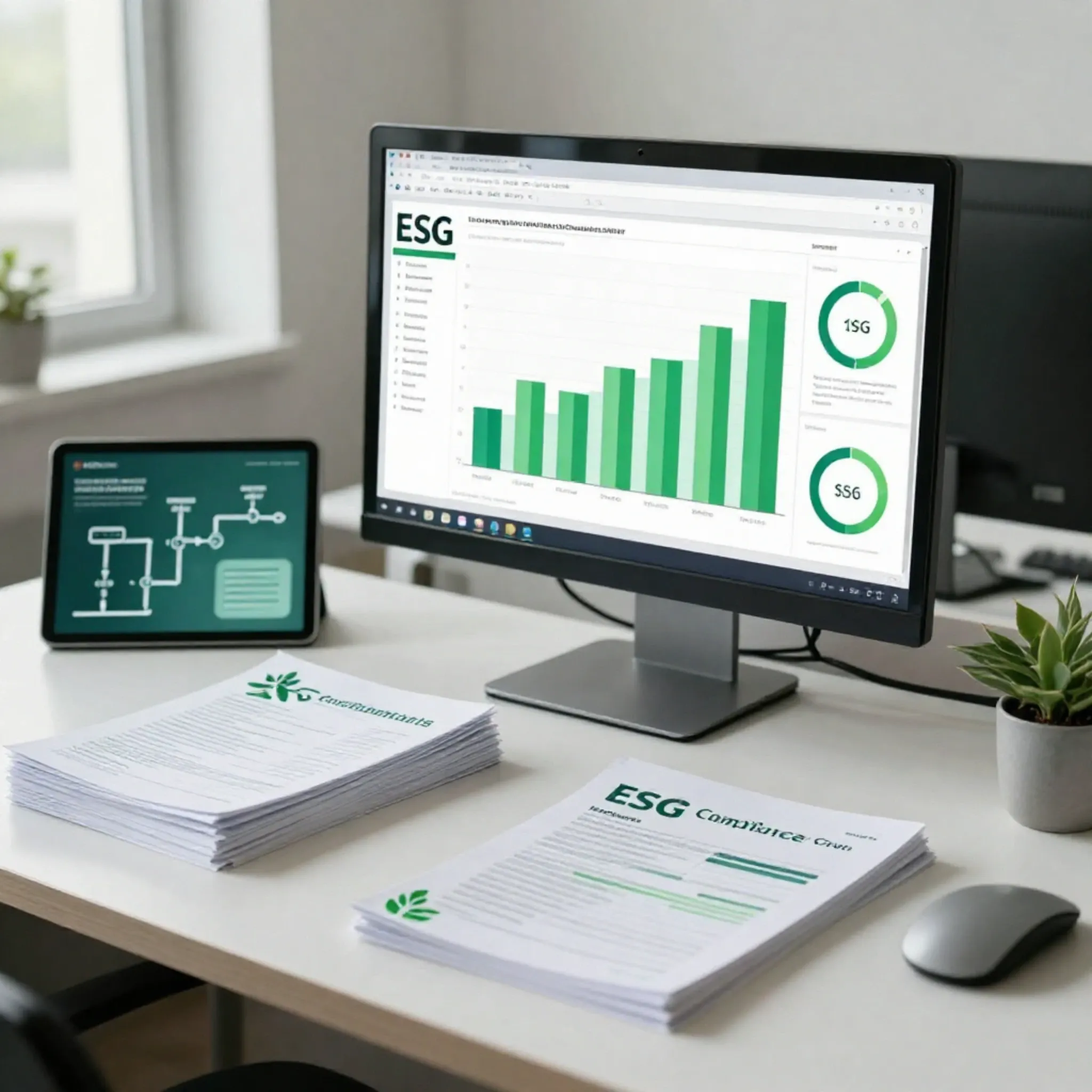
For years, sustainability reporting has worked the same way at most companies. Once a year, teams pull together data, write a report, publish it, and check the regulatory box. That used to be enough. It is not anymore.
As ESG regulations get tougher and stakeholders push for more transparency, organizations are realizing something important. The hard part was never writing another report. The hard part is building the ability to collect, validate, and actually use sustainability data all year round, across the whole business.
The companies pulling ahead are not asking how to report on ESG anymore. They are asking how to build ESG into the way they actually run the business and make decisions.
The ESG Imperative
ESG stands for Environmental, Social, and Governance, three simple lenses for judging how responsibly a company actually operates, not just how much profit it makes. Environmental is about how a business treats the planet. It's carbon output, energy and water use, waste habits, and how ready it is for climate risks. Social is about how a business treats people, its employees, the conditions they work in, how seriously it takes diversity, and the mark it leaves on the communities around it. Governance is about how a business runs itself. How accountable its leadership is, how transparent its decisions are, and whether it operates ethically day to day.
Together, these three areas have grown into something bigger than a corporate responsibility checkbox. They have become a real measure of how resilient a business is over the long run. Investors use ESG to judge risk before they invest. Customers use it to decide who they want to work with. Regulators use it to judge whether a company is being run the right way. ESG is not just about values anymore. It is a practical signal of how trustworthy and durable a business really is.
Compliance Is Rising
Three things are pushing this shift at the same time. ESG regulations are expanding across the globe and getting stricter. Investors want sustainability data that is just as solid as financial data. And customers, lenders, and supply chain partners are now factoring ESG performance into who they choose to work with.
Here is the real insight for leaders. Publishing a report is no longer where the advantage lies. The advantage belongs to companies that can produce trusted sustainability data continuously, not just once a year.
Automation Changes Everything
ESG reporting has quietly turned into a data problem before it's a reporting problem. Companies need information from finance, HR, procurement, operations, manufacturing, even suppliers. The hard part was never collecting data. It's making sure that data is accurate, consistent, and ready for an audit.
Most companies are still doing this with spreadsheets and manual work, which leads to numbers that don't match, late reports, duplicate effort, and shaky audit readiness.AI is changing this faster than most leaders expect. According to Environmental Protection's 2026 analysis, citing PwC and Wavestone, 59 percent of organizations now use AI for ESG reporting, and AI use specifically for sustainability nearly tripled in a year, from 11 to 28 percent.
In practice, AI now pulls data together automatically from ERP systems, sensors, and supplier records. It maps one set of data across frameworks like GRI, CSRD, and CDP at once. It matches activity data to the right carbon accounting factors. And it catches errors before they reach a disclosure, building the audit trail more companies now need for outside verification. But only 27 percent of organizations review all AI-generated content before publishing it. Most are publishing with little human oversight, which is a real greenwashing risk.
Strategy Over Compliance
The real impact goes beyond saving time. It changes how companies manage risk, allocate capital, and build trust.
Automation frees people from repetitive work, cuts costs, and gives access to far more data than manual methods ever could, running around the clock and scaling as needs change.
Put together, ESG stops being a side task and becomes part of how the business actually runs. Risk gets caught early instead of at deadline. Sustainability data starts shaping decisions in procurement, supply chain, and investment planning. And because the data holds up, trust becomes something a company can prove, not just claim.
Ask Better Questions
Instead of asking which ESG platform to buy, leadership teams are better off asking four harder questions. Is our ESG data centralized, or still scattered across departments? The goal should be one shared data foundation, not isolated reporting in every silo.
Can our reporting process actually keep up as regulations keep changing? Reporting needs to adapt across multiple disclosure frameworks without a massive manual effort every cycle. Are we really automating our workflows, or have we just replaced spreadsheets with nicer dashboards? The point isn't to make things look nicer. It's to actually automate the work itself, the data collection, the validation, the approvals, the reporting.
Is ESG data actually shaping our strategy, or only looked at once a year during reporting season? If sustainability data only gets attention at reporting time, companies are getting compliance value but missing the bigger strategic value.
Data Defines Resilience
The future of sustainability reporting will not come down to writing better reports. It will come down to having better data. As ESG expectations keep rising, automation is becoming less about cutting reporting work and more about building a real, enterprise-wide intelligence capability. Companies that weave sustainability data into their everyday decisions will be in a far stronger position to manage risk, adapt to regulatory change, build stakeholder trust, and create lasting business resilience. Compliance may be the starting point, but competitive advantage comes from how organizations act on their data.
At TEI, we take the complicated shifts businesses are going through and turn them into insights leaders can actually use, so navigating change feels a little less like guesswork and a lot more like clarity.
Trending
View All